Softer lines
Resurfacing can soften fine lines and etched wrinkles.

Fractional CO2 resurfacing for smoother face and neck skin, softer lines, and less visible acne scars, with a planned period of healing.
Explore the changes you may see or feel.
Resurfacing can soften fine lines and etched wrinkles.
Treatment can reduce roughness and the appearance of enlarged pores.

Collagen remodeling can soften the edges and uneven texture of acne scars.

Potential benefits. Results vary. Editorial photos are illustrative.
Solaria creates tiny columns of resurfacing in the skin, removing small areas of damaged tissue while leaving surrounding skin untreated. Healing and collagen remodeling can improve rough texture, wrinkles, and acne scars.
Our Face & Neck service treats both areas. The face and neck have different skin thicknesses, so the intensity is adjusted across the treatment area.
Photo is illustrative.
Arrive one hour before your appointment for numbing cream, as specified in our booking information. Active laser treatment of the face often takes around 30–45 minutes; adding the neck and treating more intensively can take longer. Numbing time is additional.
One hour is set aside before the appointment for topical numbing. Protective eyewear is used during treatment.
The handpiece delivers a pattern of tiny CO2 laser spots across the selected skin.
Redness, swelling, peeling, and sensitivity are expected. Keep the skin protected while its surface heals.
Solaria CO2 Laser treatment comparisons. Individual results vary.
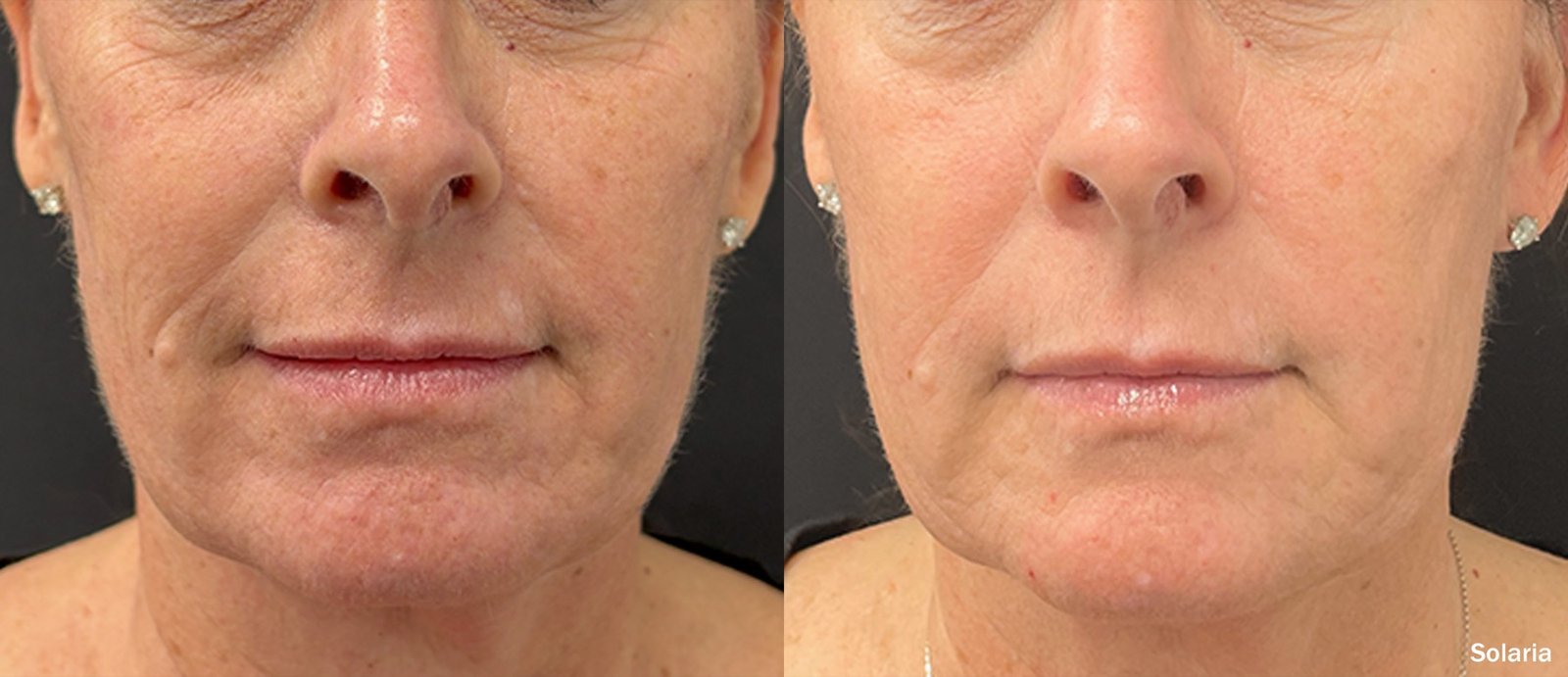
Original comparison photos shown without cropping. Select a thumbnail to see another case.
Fractional CO2 skin healing commonly takes about 1–2 weeks. Redness can persist after the surface has healed, and stronger settings can mean a longer recovery. Texture becomes easier to assess after healing; collagen changes can continue for months.
Arrive early for numbing, according to our booking instructions.
General CO2 skin-healing estimate; depth and response affect recovery.
Collagen remodeling continues beyond the initial healing period.
Avoid direct sun, tanning, and prolonged UV exposure for at least two weeks before and after treatment. Do not pick peeling skin or wear makeup on unhealed skin. Use the supplied wound-care products while healing; broad-spectrum SPF 30+ and sun protection remain essential once the surface has healed.